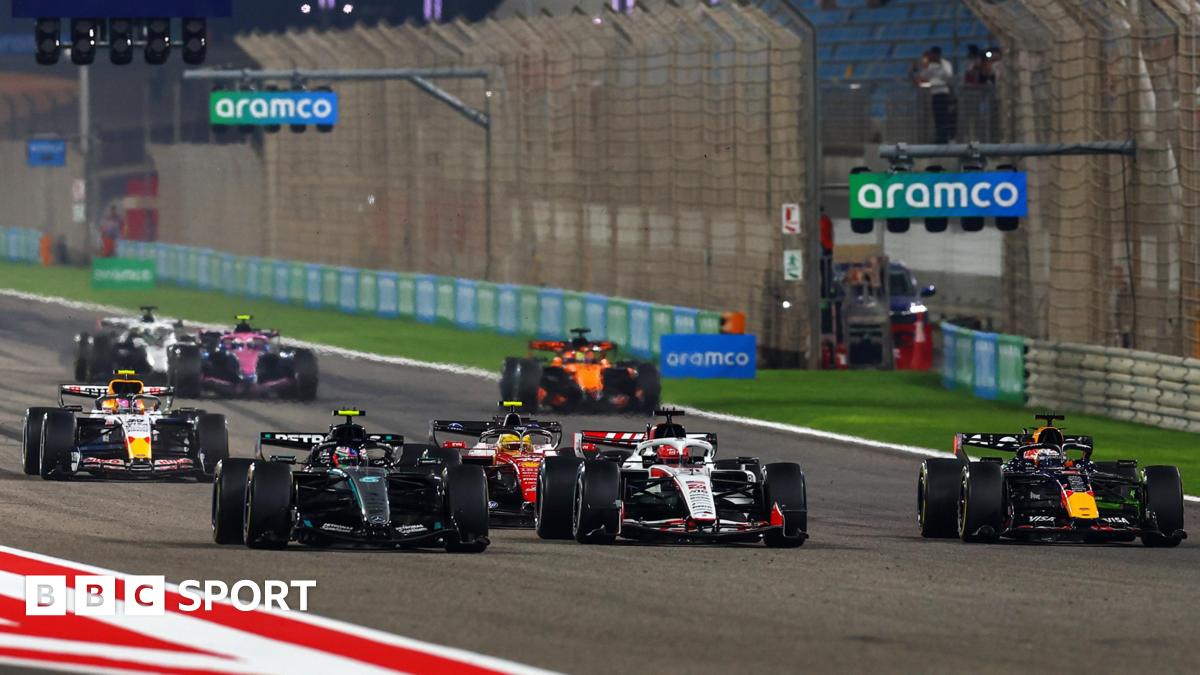
F1 Engine Rule Update: Compression Ratio Measured Hot From 2027 – A New Era of Fairness and Innovation
Formula 1, often dubbed the pinnacle of motorsport, is not just a spectacle of speed and daring overtakes; it's a relentless technical battleground where the smallest detail can unlock a crucial performance advantage. In this high-stakes environment, even the rules themselves are subject to intense scrutiny and debate. A recent and highly significant **f1 revise rule** update from the FIA – Formula 1's governing body – has sent ripples through the paddock, changing how engine compression ratios will be measured, with full implementation by 2027. This pivotal adjustment comes after a pre-season technical row, primarily driven by rival manufacturers suspecting Mercedes of exploiting a loophole related to material technology. The unanimous approval of this change by all power unit suppliers underscores its importance for competitive parity and the future direction of engine development.
The Heart of the Matter: Understanding Compression Ratio in F1
At the core of this technical dispute lies the compression ratio, a fundamental metric in internal combustion engine design. Simply put, the compression ratio is a measurement of the cylinder volume when the piston is at its lowest point (bottom dead center) compared to when it's at its highest point (top dead center). It dictates how tightly the air-fuel mixture is squeezed before ignition. A higher compression ratio generally leads to greater thermal efficiency and, consequently, more power output from the engine. This is because compressing the mixture more intensely before combustion allows for a more complete and powerful burn.
For the 2026 power unit regulations, which represent one of the most significant overhauls in recent memory, the compression ratio limit was reduced from 18:1 under previous rules to 16:1. This reduction was a strategic move by the FIA, aimed at making the sport more appealing to new manufacturers like Audi and Ford, and encouraging a near 50-50 split between internal combustion and electrical power. Honda, too, reversed a decision to quit, attracted by these forward-thinking regulations. The intention was to create a more level playing field and foster innovation within specific, well-defined parameters. However, as is often the case in F1, where there's a rule, there's always a team meticulously searching for an optimal interpretation.
The Compression Conundrum: Mercedes, Materials, and the Push for Change
The catalyst for this **f1 revise rule** was a fierce pre-season debate spurred by several rival manufacturers, including Audi, Ferrari, Red Bull, and Honda. Their concern centered on the belief that Mercedes had gained a significant advantage through ingenious application of materials technology, particularly regarding how their engine components behaved under race conditions.
The original rule stipulated that the 16:1 compression ratio limit would be measured at ambient temperature. However, internal combustion engines, by their very nature, operate at extreme temperatures, often exceeding 100°C. A known phenomenon in engineering is thermal expansion, where materials tend to expand when heated. This expansion typically leads to a slight decrease in the effective compression ratio as the engine warms up.
Rivals suspected that Mercedes had found a more effective way to limit this thermal expansion, or perhaps even engineer components to expand in a way that *maintained* a higher effective compression ratio at operating temperatures than other manufacturers could achieve. While Mercedes F1 boss Toto Wolff downplayed any potential gain, suggesting it amounted to "a few horsepower – in England you would say a couple, which is more like two and three," some estimates from the paddock suggested a more substantial gain of up to 0.3 seconds per lap.
Crucially, the FIA had measured the Mercedes engine at both ambient and operating temperatures and confirmed it complied with the 16:1 limit at all times. This highlights the nuance of the situation: Mercedes wasn't necessarily *breaking* the rule, but potentially operating at the very edge of its interpretation, optimizing within the defined parameters in a way others found difficult to emulate. The rivals' collective push for change was less about penalizing a rule-breaker and more about ensuring that the spirit of the regulation – competitive fairness at *operating* conditions – was upheld. You can delve deeper into the origins of this dispute in
Mercedes Rivals Force F1 Engine Rule Change: Compression Ratio Battle.
A Phased Approach: Measuring Hot for Fairer Competition
Responding to the unified voice of the power unit manufacturers, the FIA approved a multi-phase implementation of the new compression ratio measurement protocol. This **f1 revise rule** introduces a significant shift:
* **From June 1st of the current season:** The compression ratio will be measured at a standardized operating temperature of 130°C, *in addition to* the existing ambient temperature checks.
* **From the 2027 season onwards:** The compression ratio will *only* be measured at 130°C.
This phased approach provides manufacturers with a crucial transition period to adapt their designs and testing procedures. The decision to measure solely at 130°C from 2027 marks a pivotal moment. It means that, effectively, manufacturers will be able to design engines that might exceed the 16:1 compression ratio limit when measured at ambient temperature, provided they meet the 16:1 limit at the stipulated 130°C operating temperature. This isn't a relaxation of the limit, but rather a realignment of the measurement methodology to reflect real-world operating conditions more accurately.
The implications are clear: the focus of engineering efforts will now definitively shift towards optimizing engine performance and material behavior specifically at high operational temperatures, rather than just meeting an ambient temperature compliance test. This change ensures that all teams are designing to the same, more realistic, operational parameters, fostering a truly level playing field where thermal management and material science innovation within these specific constraints will be paramount. For a more detailed breakdown of the FIA's reasoning behind this change, explore
F1 Revises Engine Compression Rule: Why FIA Changed Measurement.
Shaping the Future: Impact on Power Unit Development and F1's Landscape
This **f1 revise rule** update has profound implications for the intricate world of F1 power unit development. Engine designers and material scientists will now have a clearer, more consistent target for their optimization efforts. The challenge will be to achieve the highest possible compression ratio at 130°C while managing the thermal stresses and material integrity.
This could lead to:
*
Renewed Focus on Material Science: Expect further investment and innovation in exotic alloys, ceramic coatings, and composite materials that offer superior strength-to-weight ratios and minimal thermal expansion coefficients under extreme heat.
*
Advanced Cooling Strategies: While engine cooling is always critical, the precise control of component temperatures to maintain optimal compression ratio will become even more nuanced.
*
Refined Combustion Chamber Design: Teams will likely explore novel combustion chamber geometries that can maximize efficiency and power output within the new measurement constraints.
*
Fairer Competition for New Entrants: For manufacturers like Audi and Ford, who were attracted to F1 by the promise of the 2026 regulations, this clarification ensures that the competitive landscape is based on genuine engineering prowess at race conditions, rather than subtle interpretations of measurement protocols.
The FIA's statement acknowledged that "with the introduction of such significant regulatory changes [for 2026], there are collective learnings to be taken from pre-season testing and the initial rounds of the 2026 championship." This compression ratio adjustment is a prime example of the governing body's proactive approach to refining regulations based on real-world feedback and technical discoveries. It highlights the dynamic "arms race" that defines F1 – not just on track, but in the regulatory offices where rules are constantly adapted to ensure fairness, promote innovation, and maintain the spectacle. Ongoing evaluations, such as those related to energy deployment and recovery, further underline the FIA's commitment to continuously optimizing the sport's technical framework.
Ultimately, this **f1 revise rule** reinforces the FIA's commitment to maintaining a level playing field. It ensures that the competition isn't won by exploiting measurement loopholes, but by genuine engineering prowess within the spirit of the rules. Teams will now channel their immense resources into optimizing material choices, cooling strategies, and combustion chamber design specifically for the operating temperature target. This might lead to even more innovative material composites or structural designs that minimize thermal deformation under extreme heat, pushing the boundaries of what's possible within the F1 engine architecture.
The F1 world stands on the cusp of a new chapter in engine development. The shift to measuring compression ratios at operating temperature from 2027 is more than just a technical adjustment; it's a strategic move to promote genuine innovation, ensure competitive fairness, and solidify the long-term appeal of Formula 1 to manufacturers and fans alike. As always, the relentless pursuit of performance within ever-evolving technical regulations will continue to define the sport.